



 Yet amid all this progress and the pressure of modern life, Organic Tattva chose a different path.
They looked to the past to shape a better future — returning to food the way our ancestors prepared it: with clean soil, mindful cultivation, and care for nature. From the very beginning, Organic Tattva has been built on the principles of health, ecology, fairness, and care. Every grain of rice, every pulse, every spice they offer carries with it a story of farmers, families, and practices rooted in sustainability.
But growing clean food is only part of the journey. Grains are most vulnerable after harvest — pests, moisture, and contamination can undo months of hard work. India alone loses up to 10% of its grain harvest each year due to poor storage. For organic food, the challenge is even greater: no pesticides, no preservatives, no shortcuts. For Organic Tattva, ensuring the purity of their produce doesn't stop in the field — it continues into how they store, transport, and protect it.
 To protect their harvest, Organic Tattva turned to a solution that preserves not just food, but integrity — GrainPro Cocoons. For more than a decade, these airtight, chemical-free cocoons have helped them safely store their organic harvests, both indoors and outdoors. The cocoons protect against infestation and humidity while naturally extending shelf life — ensuring that what’s grown without chemicals stays that way until it reaches consumers.
“We have been using GrainPro Cocoons for the storage of our organic grains for more than 10 years,” a representative from Organic Tattva shares. “We use it for indoor and outdoor storage; we can maximize any space available and buy as many grains. GrainPro Cocoons are able to preserve the quality of our organic products and keep infestation away.”
With this storage solution, their story comes full circle. What begins in the field — grown naturally, without chemicals — stays just as pure until it reaches families. The Cocoons allow Organic Tattva to buy more grain, store it for longer, and deliver food that is clean, trustworthy, and nourishing.
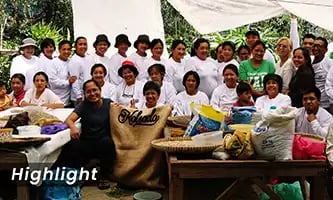
Today, Organic Tattva works with nearly 9,000 organic farmers across 15,000 hectares in Uttar Pradesh, Maharashtra, Madhya Pradesh, Rajasthan, and Jammu & Kashmir. These are more than farms — they are ecosystems built on trust, transparency, and shared knowledge. Farmers are equipped with organic know-how, crops are grown in harmony with local geography, and every product can be traced back to its source.
The result is more than just clean food.
For farmers, it means more income and stability. For the environment, it means healthier soil and cleaner water. And for consumers, it means food that can be trusted — rice that smells fresh, spices full of natural flavor, and meals that nourish in every sense of the word.
The journey of Organic Tattva reminds us that progress doesn’t always mean doing things faster. Sometimes, it means remembering how things were done before — and finding better ways to protect that wisdom for the future.
Because going back isn’t always a step backward, sometimes it’s the way forward. The kind that reminds us of where every meal truly begins — in the hands that grow it, and in the homes that savor it.